
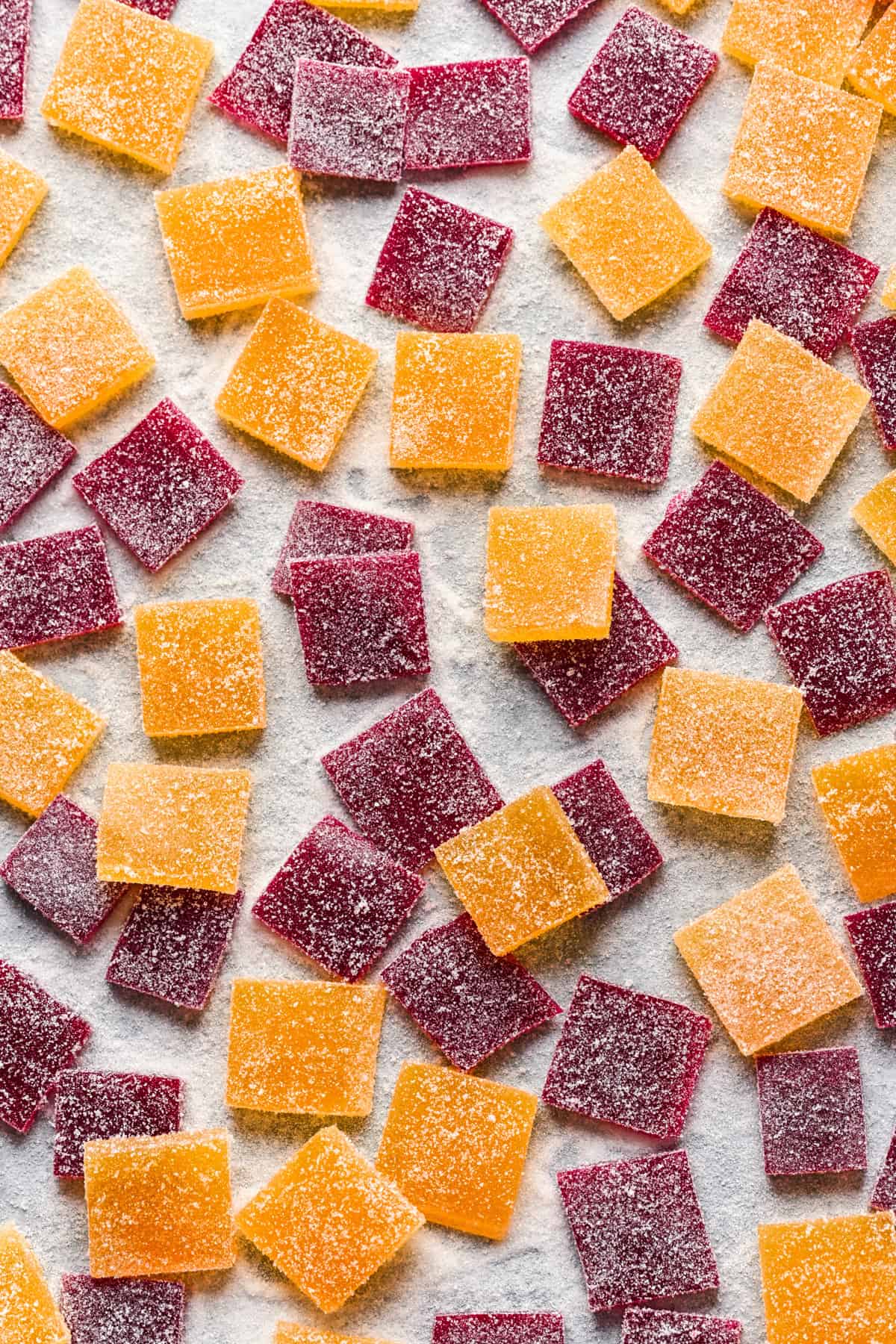
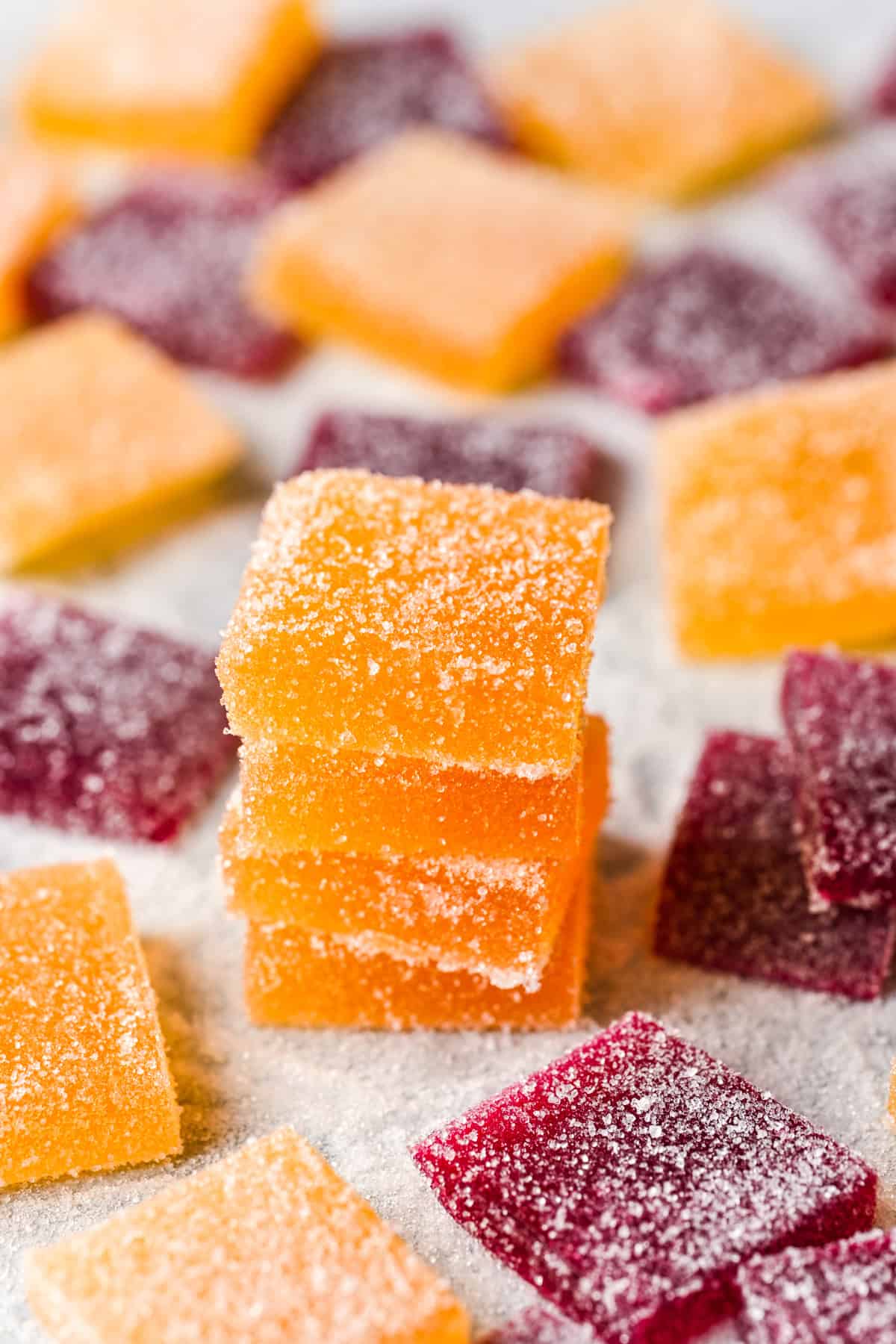
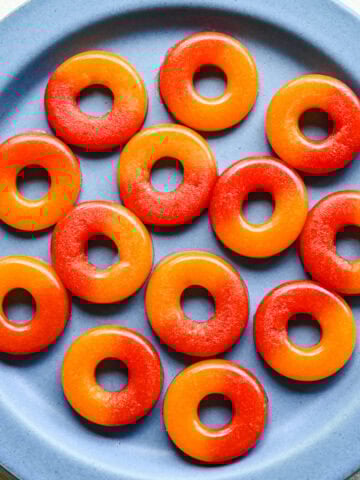
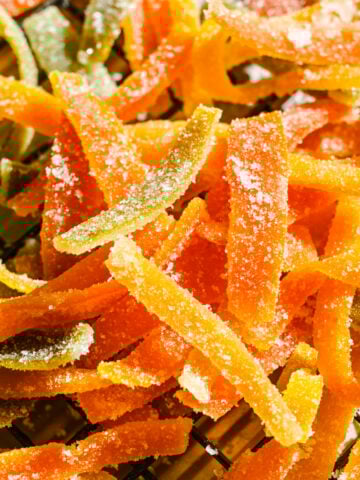
These homemade orange and pomegranate pâtes de fruits are the perfect balance of tart and sweet, with a chewy texture and crunchy sugar coating. This classy candy looks as great as it tastes and makes for an impressive edible gift!
Jump to:
These pomegranate and orange pâtes de fruits sound fancy, but they're really just delicious fruit jellies. Unlike gummy bears or gummy worms, they use pectin instead of gelatin.
Pectin is a natural fiber found in plants, and it acts as a powerful gelling and thickening agent. It comes in a powdered form, and is commonly used to thicken jams and jellies.
Pâte de fruit is a recipe that's been around for hundreds of years, but most recipes you'll see online call for corn syrup.
Our pâtes de fruits simply start with freshly-squeezed (optional, of course) fruit juice for a delicious fruity flavor. The juice is then boiled with granulated sugar and pectin. Right at the end, a splash of lemon juice is added, which helps to activate the pectin's gelling properties.
After letting the mix set up for a while, they're cut into squares and rolled into sugar. Put them in a box and give them as an edible holiday gift!
This recipe is part of our 2025 Recipe Advent Calendar. If you love homemade food gifts, try our Cranberry Pomegranate Caramels or Homemade Ferrero Rocher next!
What You'll Need to Make This Recipe
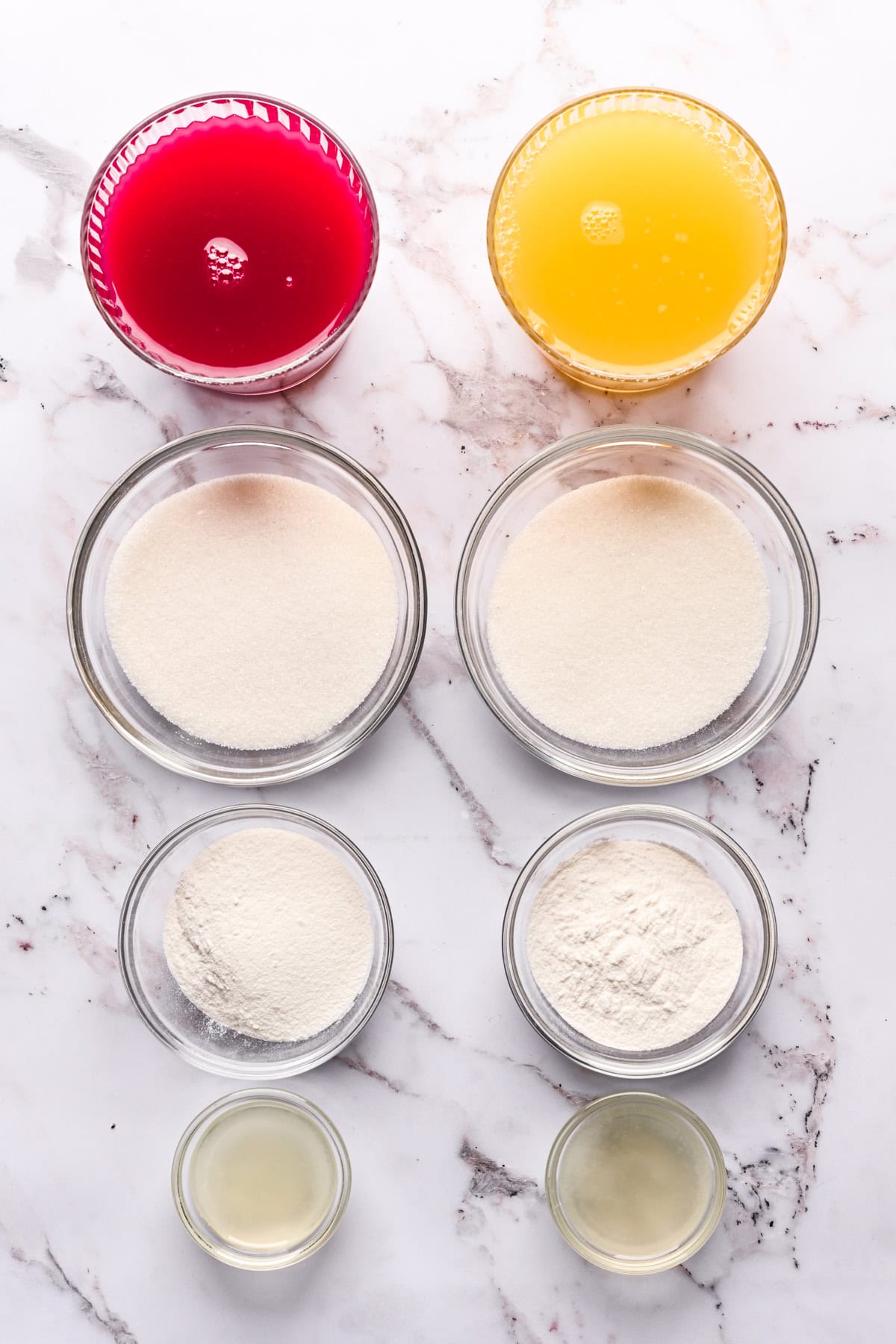
- Fruit juice or fruit puree: We used freshly-squeezed fruit juices in ours, but you could also use a well-strained homemade fruit purée. We used pomegranate and orange, but nearly any fruit will do, and popular choices include pear, raspberry, apricot, cherry and passion fruit. If you want to see how we juice a pomegranate efficiently, check out our Homemade Grenadine (Pomegranate Syrup) post.
- Pectin: Pectin comes in a few varieties, and the choice of product matters. There's classic (high methoxyl or HM) pectin, which is what we want to use in this recipe, and low or no sugar needed (low methoxyl or LM) pectin, which is what we don't want to use. Specifically, we used the Ball brand Realfruit pectin.
- Sugar and acid: Classic pectin requires sugar and an acid to gel, so we add a healthy amount of sugar and a splash of lemon juice at the end.
How to Make This Recipe
STEP 1: If you're using freshly-squeezed juice, squeeze and strain your fruit juice. To a heavy-bottomed saucepan about 9 inches (4- or 5-qt) in diameter with a candy thermometer attached to the side, add the fruit juice and bring to a simmer.
STEP 2: In a medium-sized mixing bowl, whisk together the sugar and pectin, then slowly pour the mixture of sugar and pectin into the simmering fruit juice, whisking as you go to prevent clumping or sticking to the bottom of the pan.
STEP 3: Continue cooking over medium high heat, stirring occasionally, until the mixture comes to a boil. Keep cooking until it reaches 223˚F. It will take 15-20 minutes or longer to get to the target temperature.
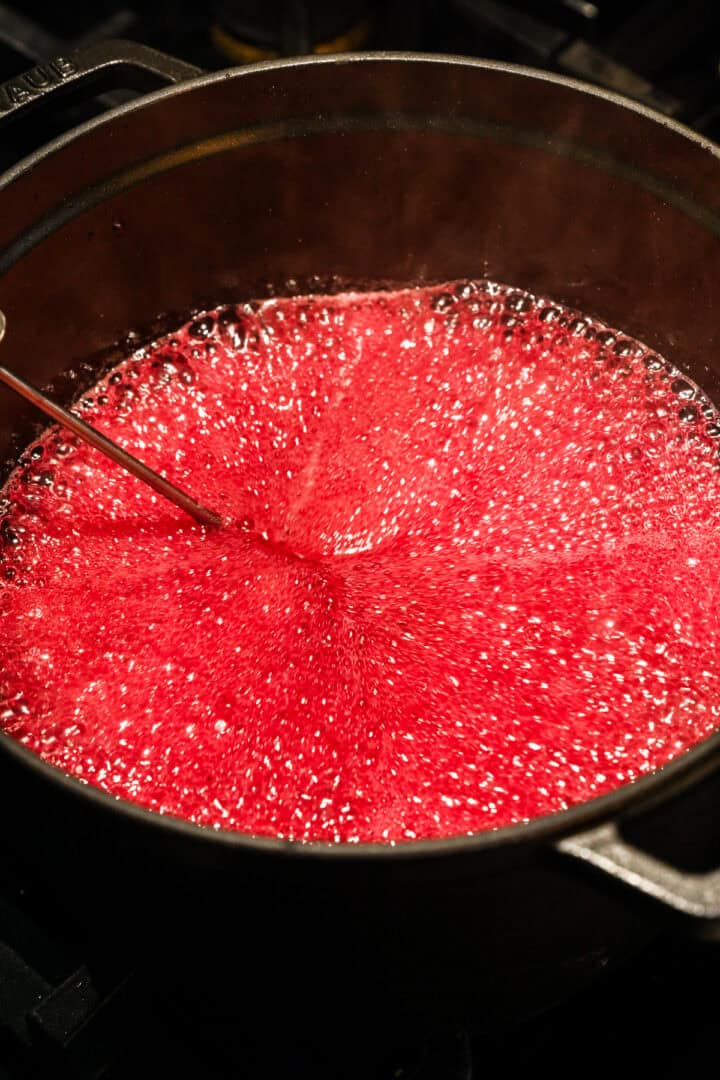
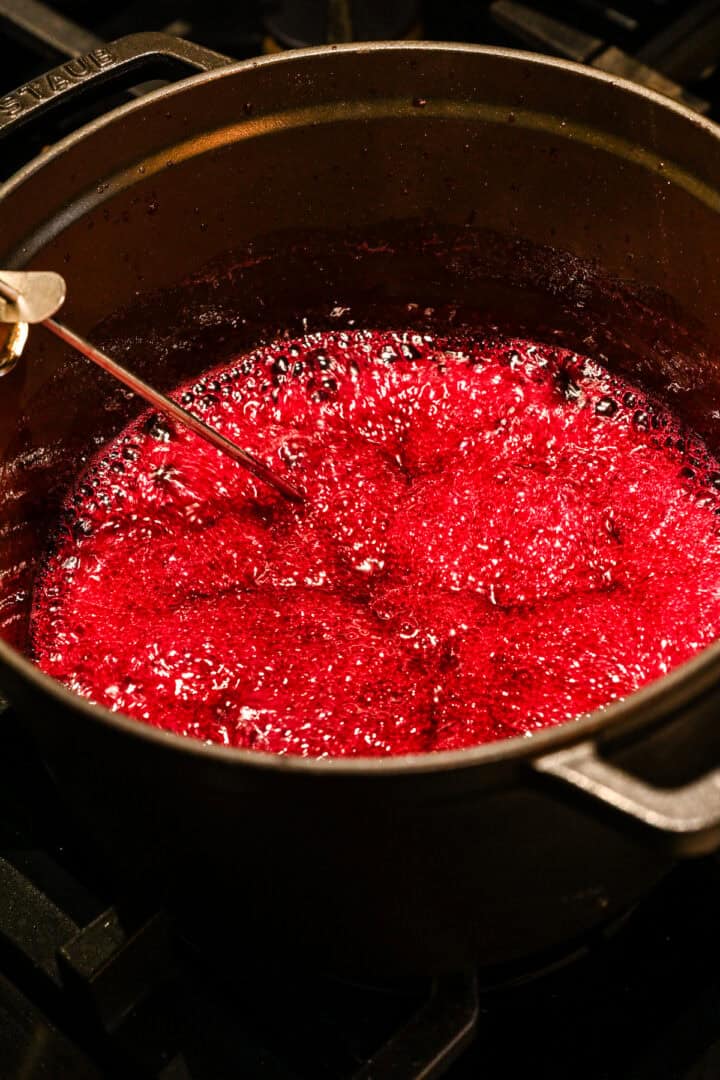
STEP 4: Turn off the heat, then add in the lemon juice, stir, and quickly pour into a roughly 8x8-inch (20x20-cm) parchment paper-lined dish.
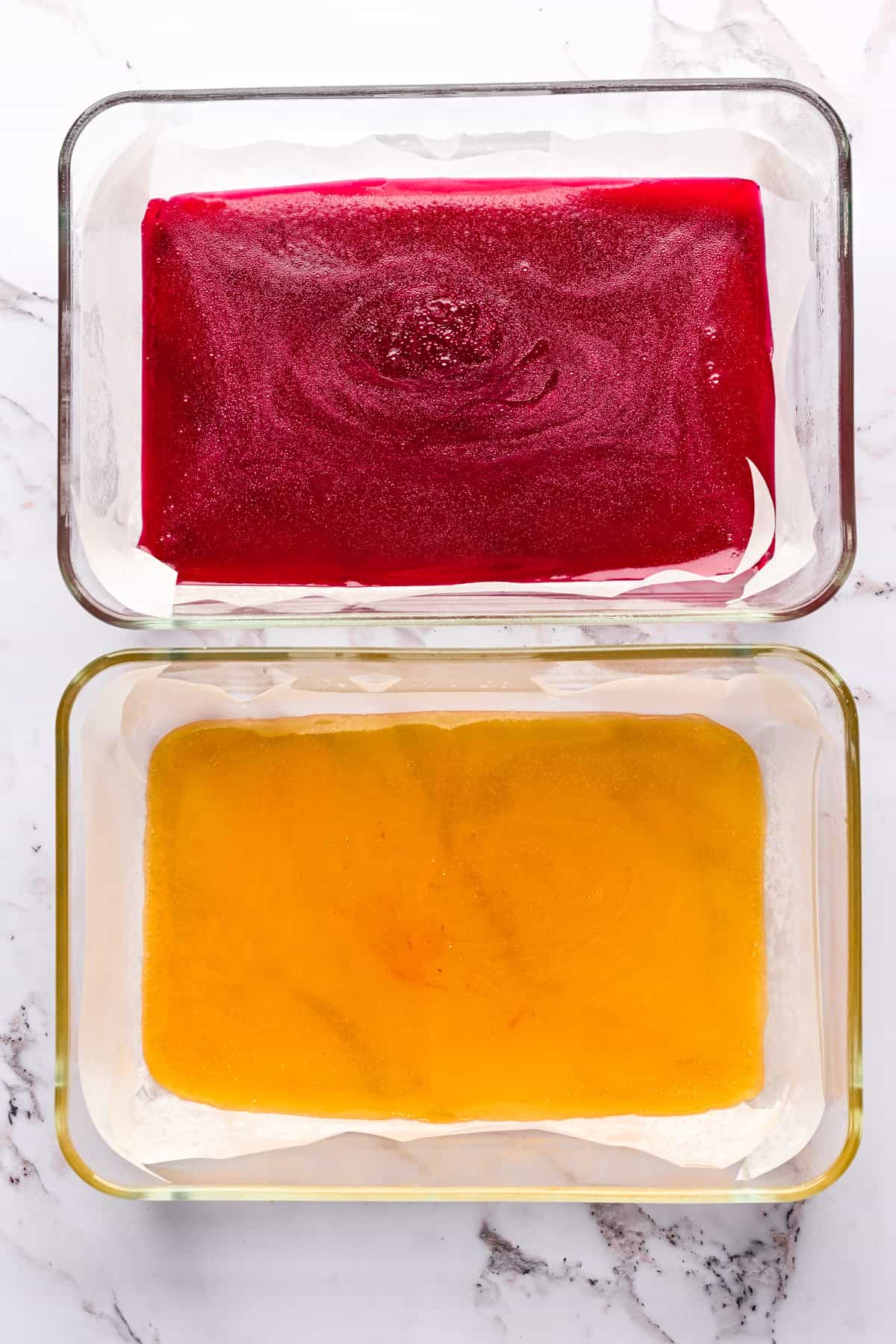
STEP 5: Allow the pâte de fruit to sit at room temperature for 24-36 hours. A long period of sitting and drying out will help prevent weeping (moisture coming out) after they are rolled in sugar.
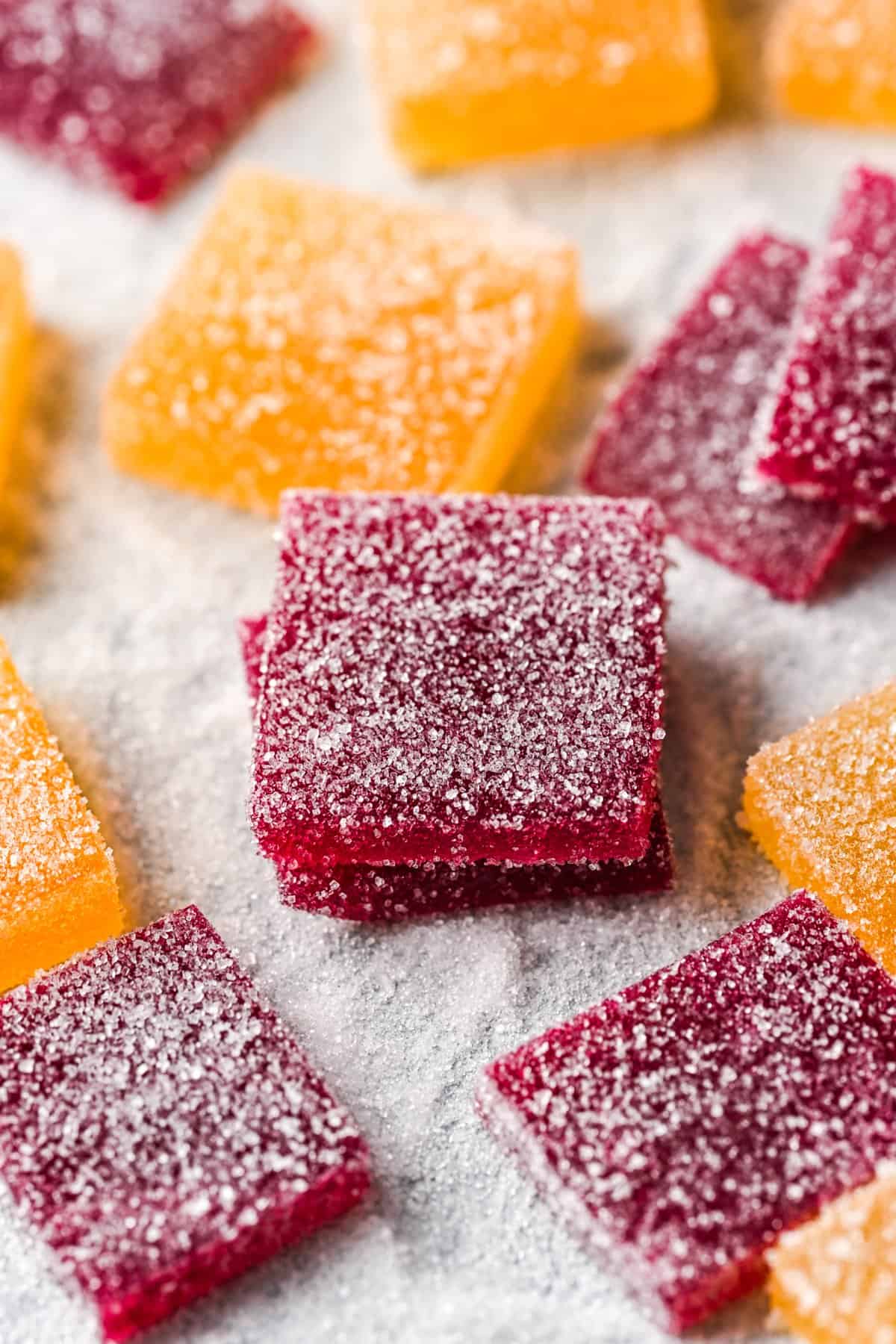
STEP 6: Spray a knife with cooking spray or lightly coat with oil and cut the pâte de fruit block into squares that are roughly 1.5-inches x 1 .5-inches. Add about half cup of sugar to a plate and place each square into the sugar, flipping it over and coating all sides.
Lexi's Best Tips and Tricks
- Temperature is key: Pectin needs to reach about 217˚F-222˚F to gel, and we like to take ours slightly past the upper end of that range to be safe, and hold it there for a few seconds. If you don't get it to this temperature, your pâtes de fruits will not gel correctly. This is all to say that you will need a candy thermometer. We use this thermometer.
- Let them cure: You can enjoy these right away, but if you want to coat them in sugar without having moisture seep out, you'll need to let these cure at room temperature at least overnight, but ideally 24 to 36 hours.
- Coating in sugar: We like the slight granular crunch of the sugar, but it's not completely necessary to coat them. If you are coating them, and you wand an even crunchier bite, use an organic or coarse sugar with even larger grains.
- Pectin: We used powdered original / classic pectin and not low or no sugar added pectin. We haven't tried using liquid pectin, but you can substitute 4 tablespoons of powdered pectin for 6 ounces of liquid pectin. You'll need to add the liquid pectin in after the sugar has reached the right temperature, unlike the powdered pectin, which goes in before.
- Sour: If you want to turn these confections into a sour treat, mix a little food grade citric acid into the sugar you use to coat your pâtes de fruits.
- Storage: You'll want to place these in an airtight container, where they will keep for up to 2 weeks.
Frequently Asked Questions
The original recipe dates all the way back to the 10th century in France, where people preserved fruit in sugar to make it last through the winter. Later on, during the 18th century, when sugar was more readily available, these became a luxury treat enjoyed by the French court.
Pâte de fruit literally translates to fruit paste.
It sounds like "pat duh-fwee".
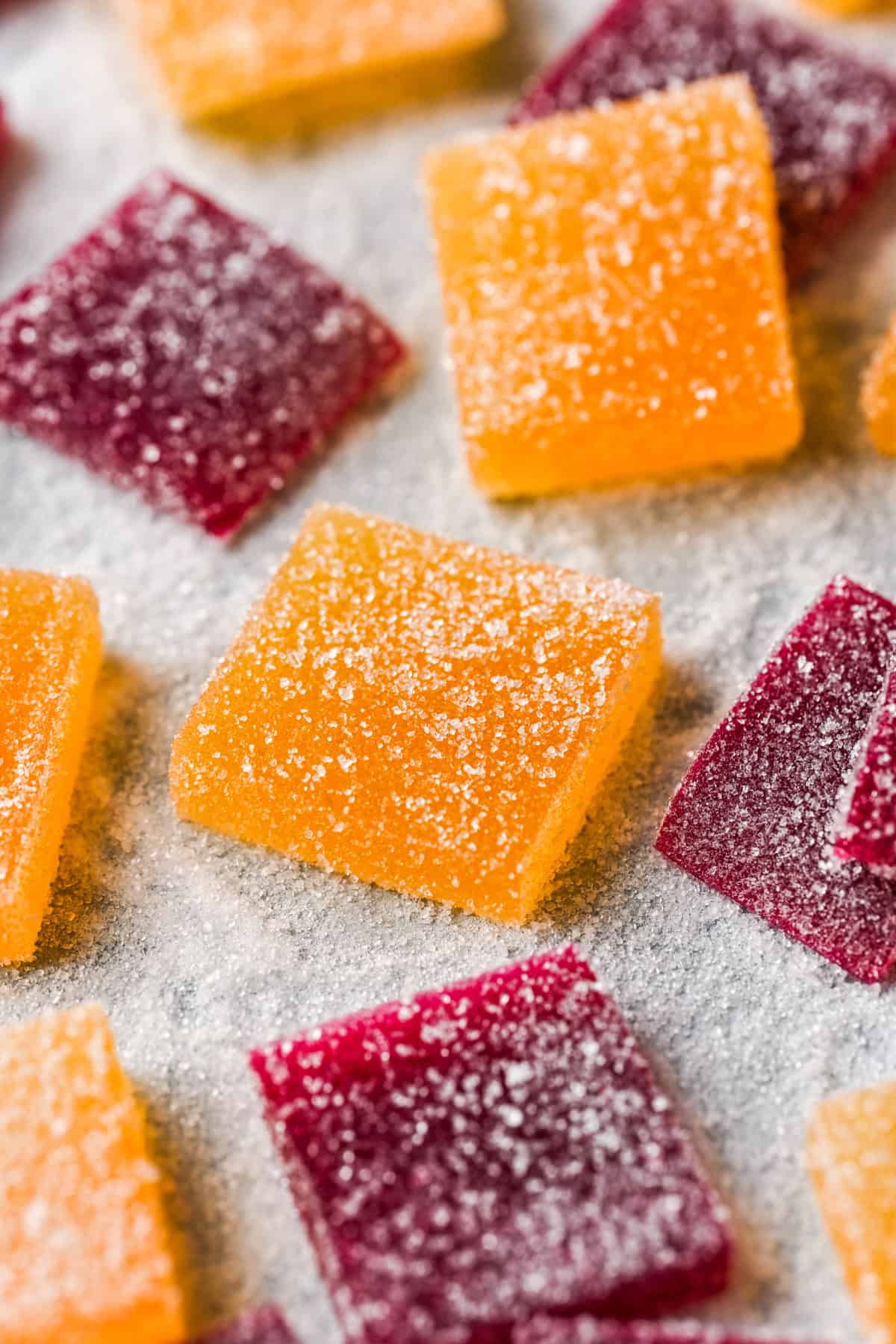
More homemade candy recipes to try
Print
📖 Recipe
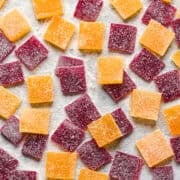
Homemade Pâtes de Fruits (no corn syrup)
- Total Time: 30 minutes
- Yield: 20-30 pieces 1x
- Diet: Vegan
Description
These homemade orange and pomegranate pâtes de fruits are the perfect balance of tart and sweet, with a chewy texture and crunchy sugar coating. This classy candy looks as great as it tastes and makes for an impressive edible gift!
Ingredients
For each flavor:
- 2 cups fruit juice (we used orange and pomegranate)
- 1 cup granulated sugar, plus more for coating
- 3 tablespoons classic pectin*
- 1 tablespoon freshly squeezed lemon juice
Instructions
- Lightly oil an 8x8 inch or 9x9 inch baking dish and line with parchment paper and set aside.
-
If you're using freshly-squeezed juice, squeeze and strain your fruit juice. To a heavy-bottomed saucepan about 9 inches in diameter with a candy thermometer attached to the side, add the fruit juice and bring to a simmer.
-
In a medium-sized mixing bowl, whisk together the sugar and pectin, then slowly pour the mixture into the simmering fruit juice, whisking as you go to prevent clumping or sticking to the bottom of the pan.
-
Continue cooking over medium-high heat, stirring occasionally, until the mixture comes to a boil. Keep cooking until it reaches 223˚F. It will take 15-20 minutes or longer to get to the target temperature.
-
Turn off the heat, then add in the lemon juice, stir, and immediately pour into the prepared 8x8 inch baking dish.
-
Allow the pâte de fruit to sit uncovered at room temperature for 24-36 hours. A long period of drying out will help prevent weeping (moisture coming out) after they are rolled in sugar.
-
Spray a knife with cooking spray or lightly coat with oil and cut the pâte de fruit block into squares that are roughly 1.5-inches x 1 .5-inches. Add about half cup of sugar to a plate and place each square into the sugar, flipping it over and coating all sides.
- Storage: Keep these in an airtight container at room temperature, where they will keep for up to 2 weeks.
Notes
*Pectin: We used powdered original / classic pectin and not low or no sugar added pectin. We haven't tried using liquid pectin, but you can substitute 4 tablespoons of powdered pectin for 6 ounces of liquid pectin. You'll need to add the liquid pectin in after the sugar has reached the right temperature, unlike the powdered pectin, which goes in before.
Temperature is key: Pectin needs to reach about 217˚F-222˚F to gel, and we like to take ours slightly past the upper end of that range to be safe, and hold it there for a few seconds. If you don't get it to this temperature, your pâtes de fruits will not gel correctly. It's very important to use a thermometer to reach the correct temperature.
Let them cure: You can enjoy these right away, but if you want to coat them in sugar without having moisture seep out, you'll need to let these cure at room temperature at least overnight, but ideally 24 to 36 hours.
Coating in sugar: We like the slight granular crunch of the sugar, but it's not completely necessary to coat them. If you are coating them, and you wand an even crunchier bite, use an organic or coarse sugar with even larger grains.
Sour: If you want to turn these confections into a sour treat, mix a little food grade citric acid into the sugar you use to coat your pâtes de fruits.
- Prep Time: 10 minutes
- Curing time: 24 hours
- Cook Time: 30 minutes
- Category: Desserts
- Method: Stovetop
- Cuisine: French
Nutrition
- Serving Size: 4 squares
- Calories: 260
- Sugar: 45.1 g
- Sodium: 55.3 mg
- Fat: 0.2 g
- Carbohydrates: 68 g
- Fiber: 2.3 g
- Protein: 0.6 g
Rachael says
Does the fruit juice need to be 100% juice? Or could I use a lemonade
Lexi says
It should be 100% juice for this recipe!
Jessica says
Love these! When I coat with sugar and put in sealed container they get really wet again. Syrupy. Is this normal or did I not let dry long enough? They sat out for over 24 hours. This has happened all 3 times I’ve made them. Still delicious! Still hold shape.And I can always dust in sugar again.
Lexi says
Hi! It's possible the mixture needs to be cooked to a slightly higher temperature. Or, you can try drying them out even longer. I'm so glad you enjoy them!
Em says
Typo under Lexi’s Tips and Tricks, under Coating in Sugar, “wand” instead of “want”