
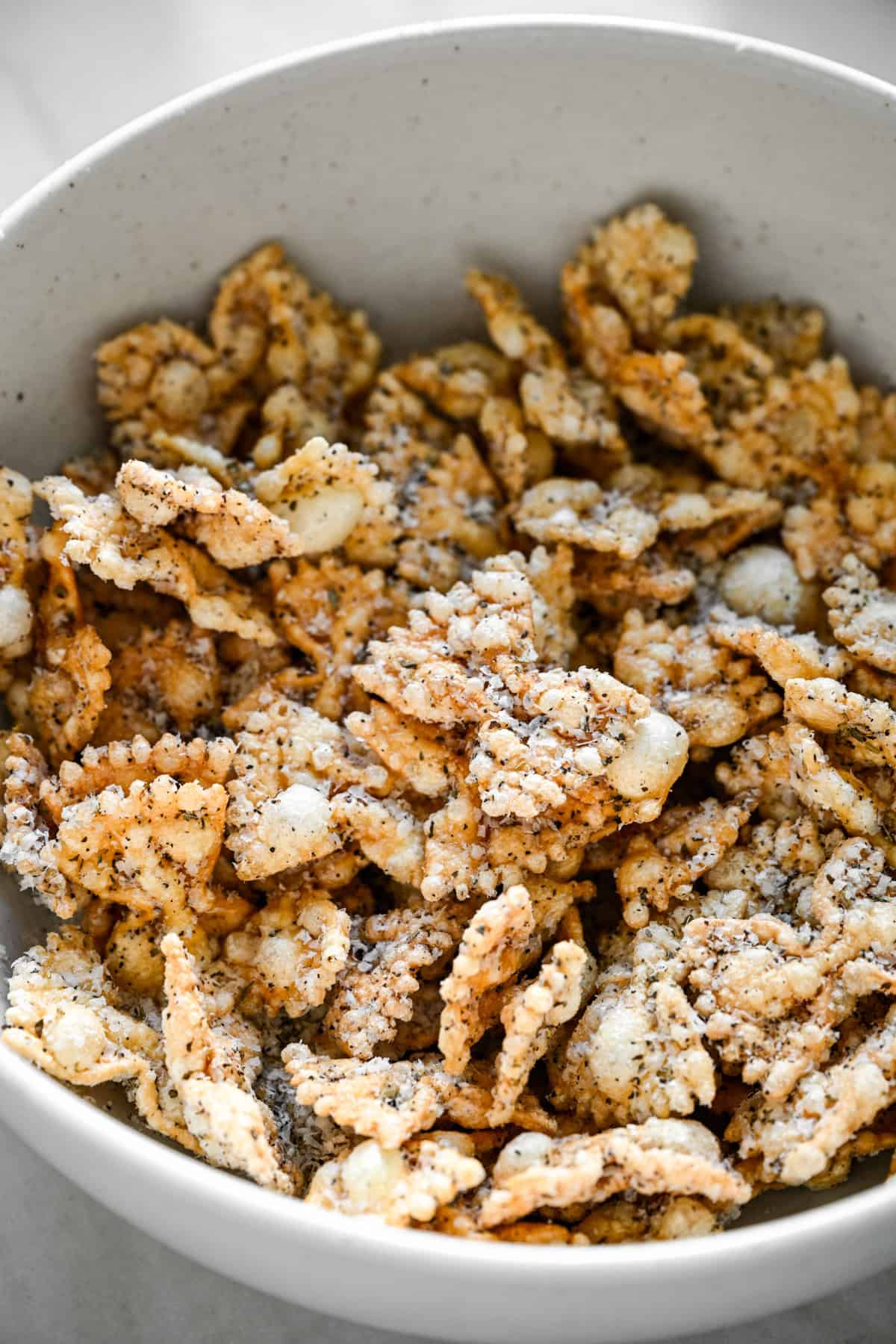
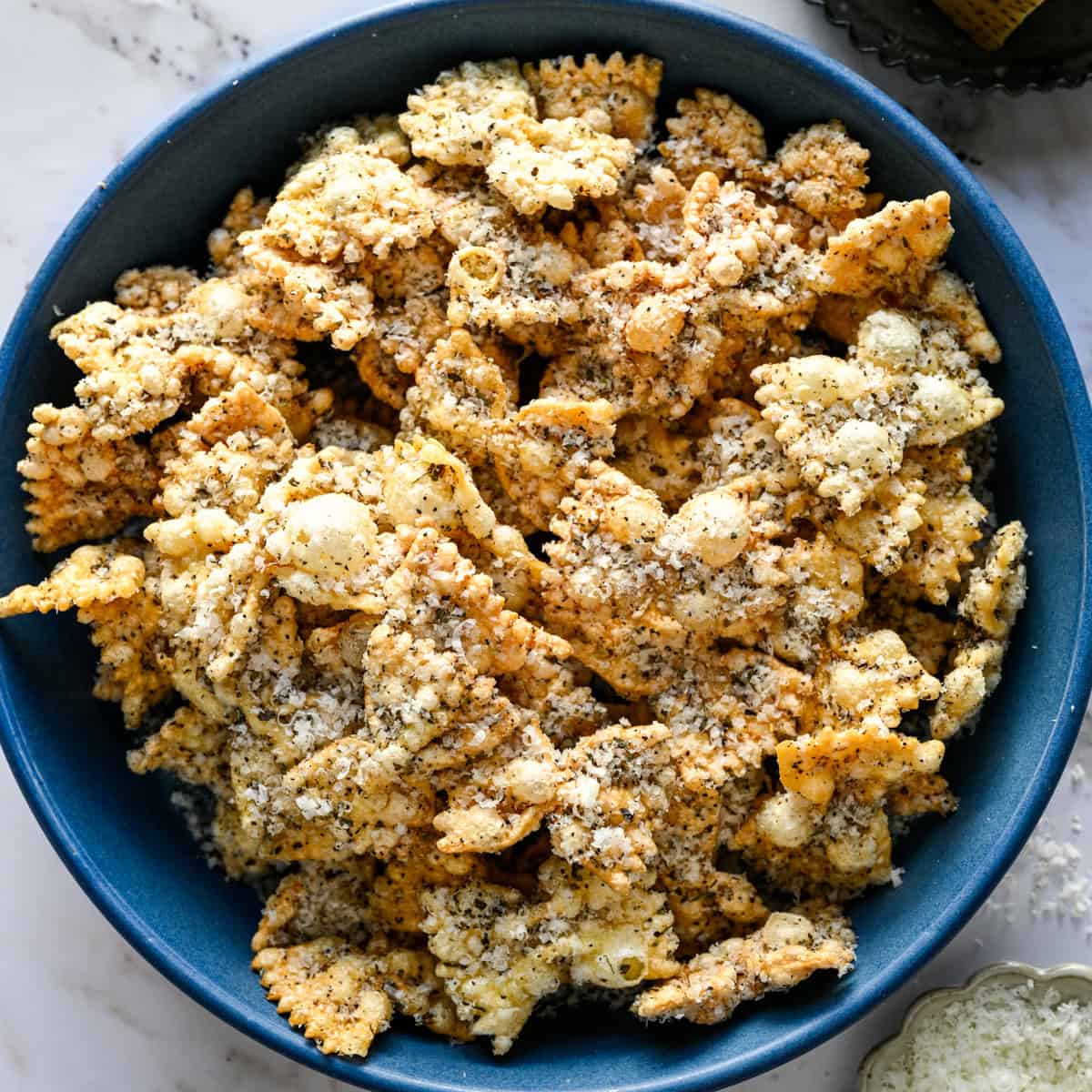
Pasta is boiled, dehydrated, then fried into crunchy, hollow pasta puffs that we toss in a cacio e pepe-inspired mixture of parmesan, pepper, salt and Italian seasoning. They're not firm like a pasta chip – the texture is more akin to a Funyun or pork rind, which makes them extra fun to eat. The process requires patience (and a dehydrator), but it's easy and super satisfying to watch the pasta puff up!
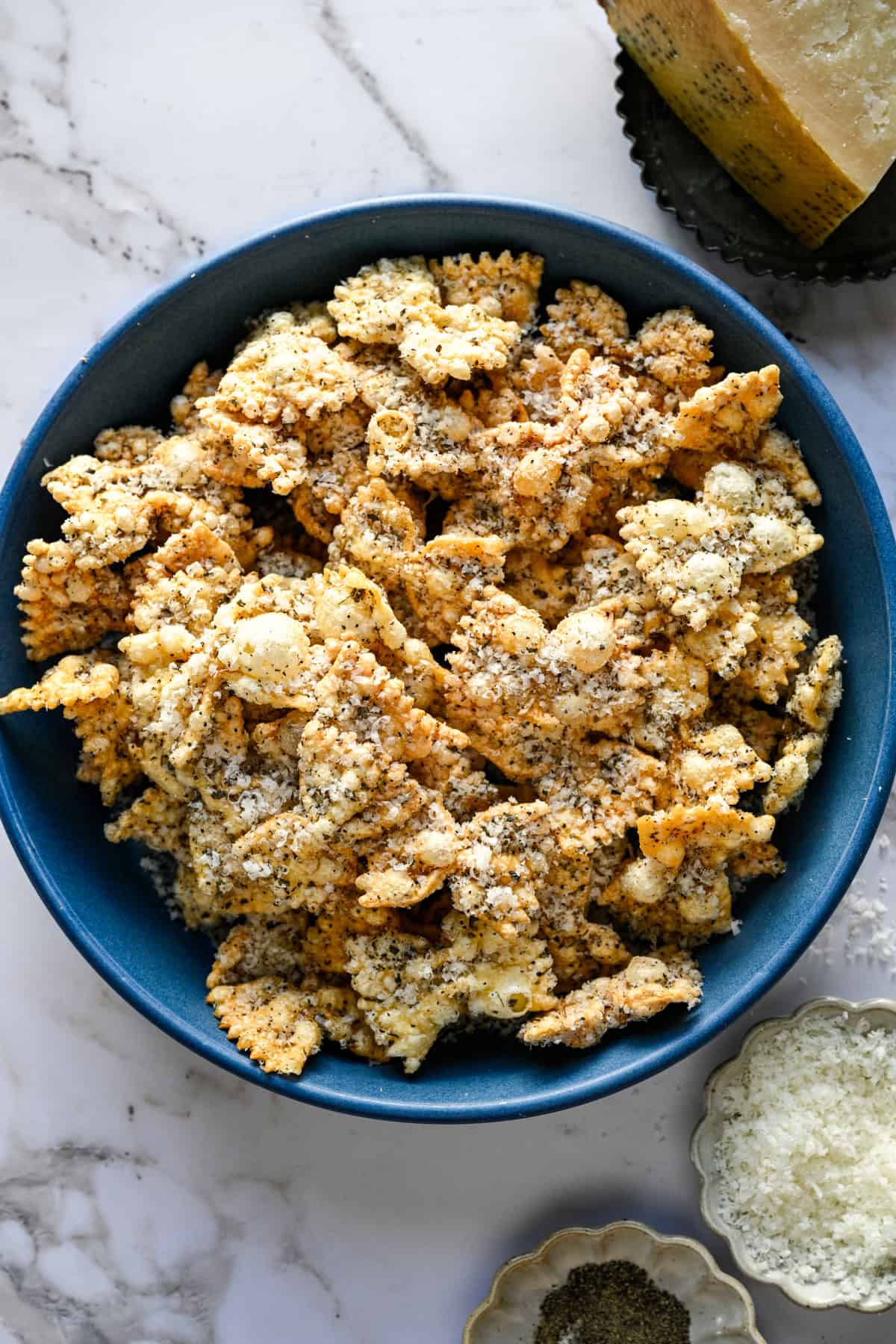
It's a chip...it's popcorn...it's a pasta puff!

It's a bit hard to describe these pasta puffs, but I can tell you what they're definitely not, and that's pasta chips. Pasta chips are pasta that's boiled, then fried or air fried until crispy, and to be honest, I don't think they're all that great. They're borderline too crunchy. Like, crack a tooth crunchy.
So we did a food science deep dive and learned that it's possible to make pasta chips that have a satisfyingly light crunch and a bubbly surface that puffs up in just a few seconds in hot oil. The process isn't difficult, it just requires a few steps – boiling, then dehydrating, then frying.
The science behind the method has to do with the starch. When boiled, the starch granules absorb water and burst open, turning the pasta into a soft starch gel. Dehydrating them hard again traps a little water inside that gel, like a tiny sealed balloon. So then when it goes in hot oil, the trapped water turns to steam and inflates the pasta chip from the inside into thousands of tiny bubbles.
Basically, the pasta puffs up into a bubbly, crunchy chip in just a few seconds, and it's super fun to watch! Think of a pork rind or funyun. It's the same kind of process/end result.
This is the kind of recipe to make if you're in the mood for a fun project, and the end result is totally worth it. These go very quickly in our house, they're just so satisfying to eat! Leave out a bowl at your next game day/potluck and we promise they'll be a huge hit.
And if you're not in the mood for a project, just make our much simpler Cacio E Pepe Air Fryer Gnocchi instead. (We get it!)
xoxo, Lexi & Beth
Key Ingredients Needed For Pasta Puffs
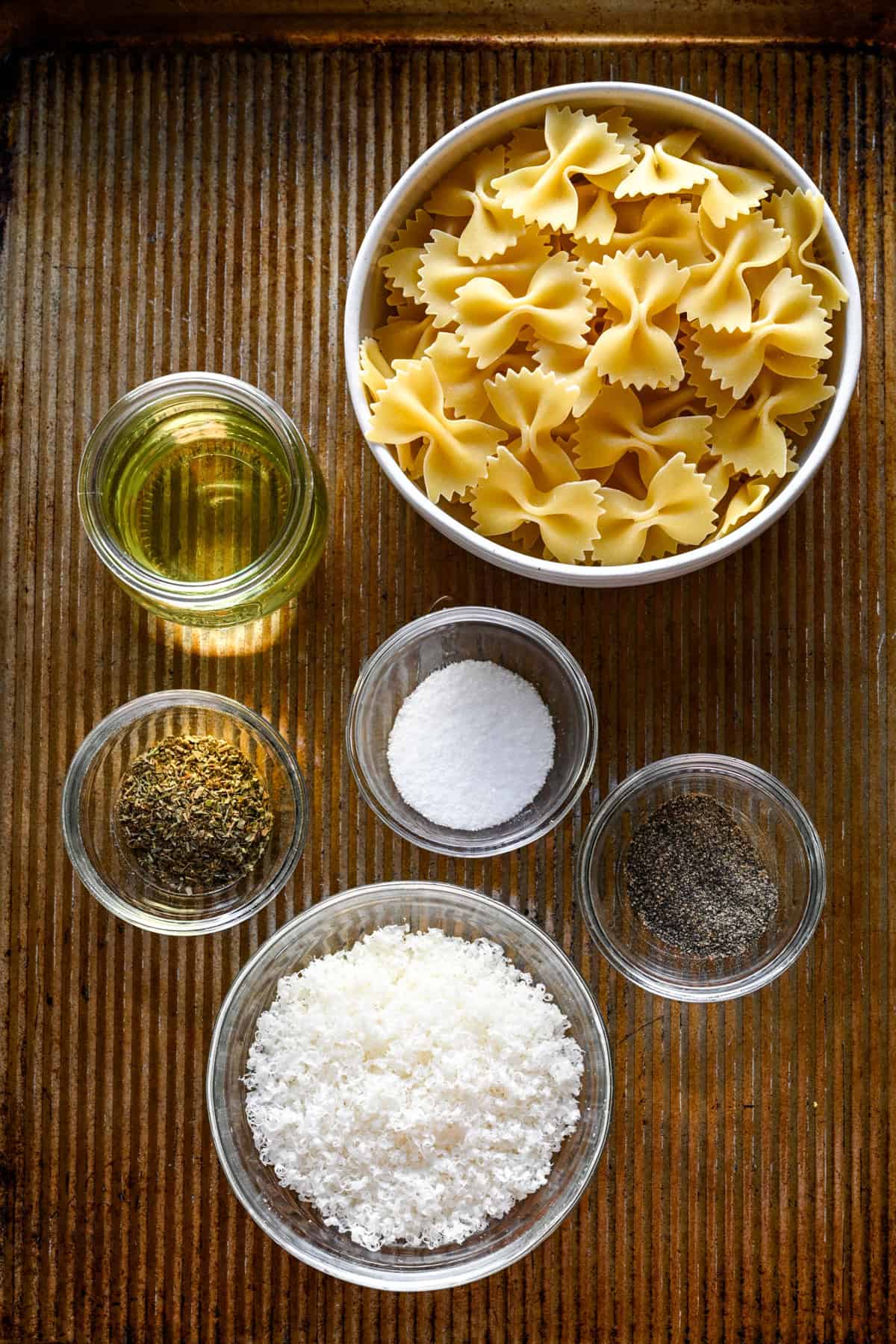
- Pasta: Shape matters here, and the flatter, the better, so that it can puff evenly. Farfalle (bowties) is our pasta of choice and we would not recommend substituting it for another variety.
- Oil: Any neutral, high-heat oil, like avocado, vegetable, peanut oil or even beef tallow will work here. You'll be heating the oil to 400˚F, so make sure not to use extra virgin olive oil, which has a low smoke point.
- Seasonings: You could keep these super simple with just salt, or add in seasonings of your choosing. We go for a cacio e pepe vibe with lots of finely grated parmesan, black pepper and a bit of Italian seasoning. They're salty, peppery and delicious!
Equipment for Making Pasta Puffs
- Dehydrator: This is a must for this recipe, because it dries out at 135˚F, which is lower than a standard oven can go. We use this dehydrator and it's great – we also use it for homemade dried fruit and even our homemade twizzlers!
- Thermometer: For ensuring the oil is at the right temperature.
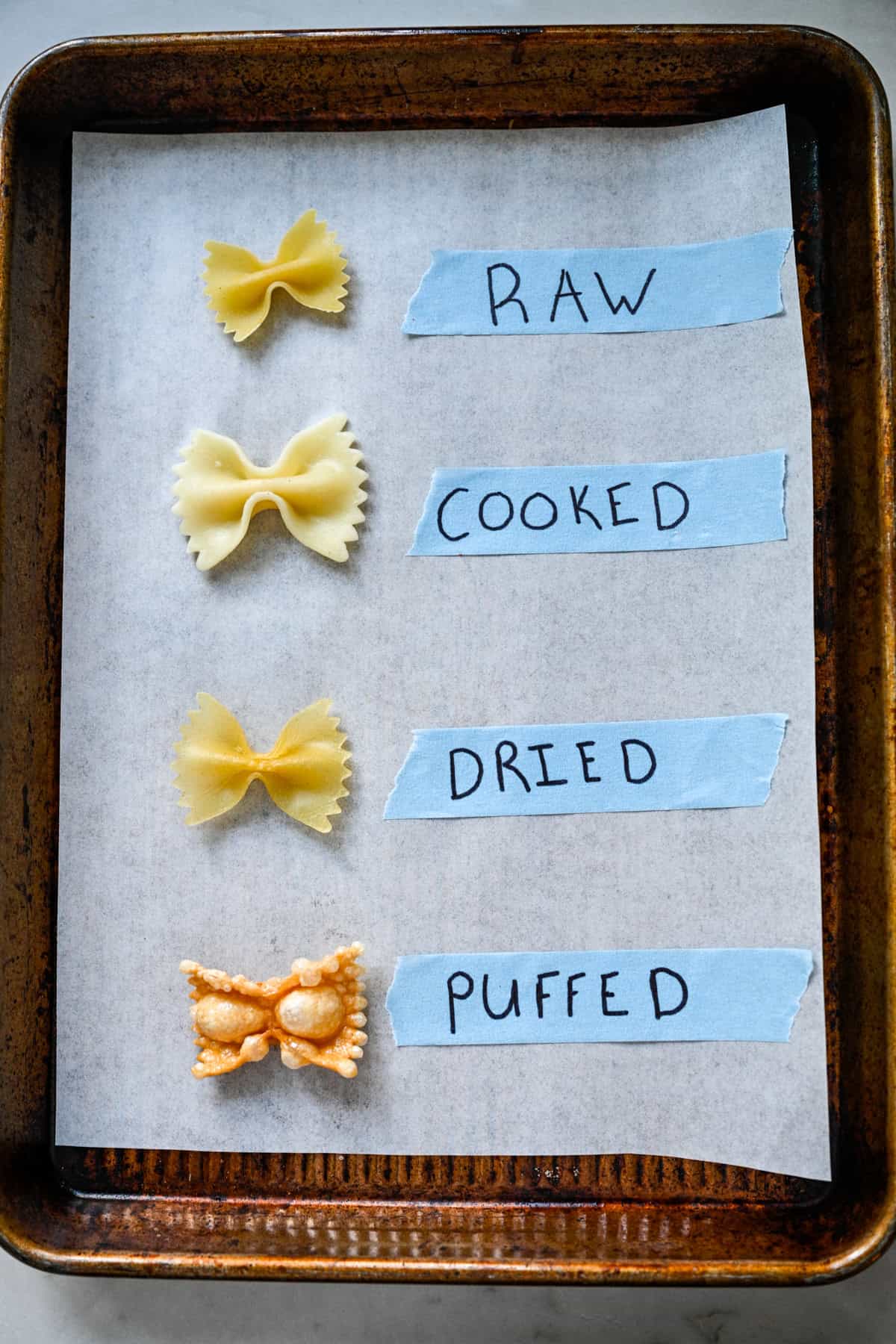
How to Make Pasta Puffs
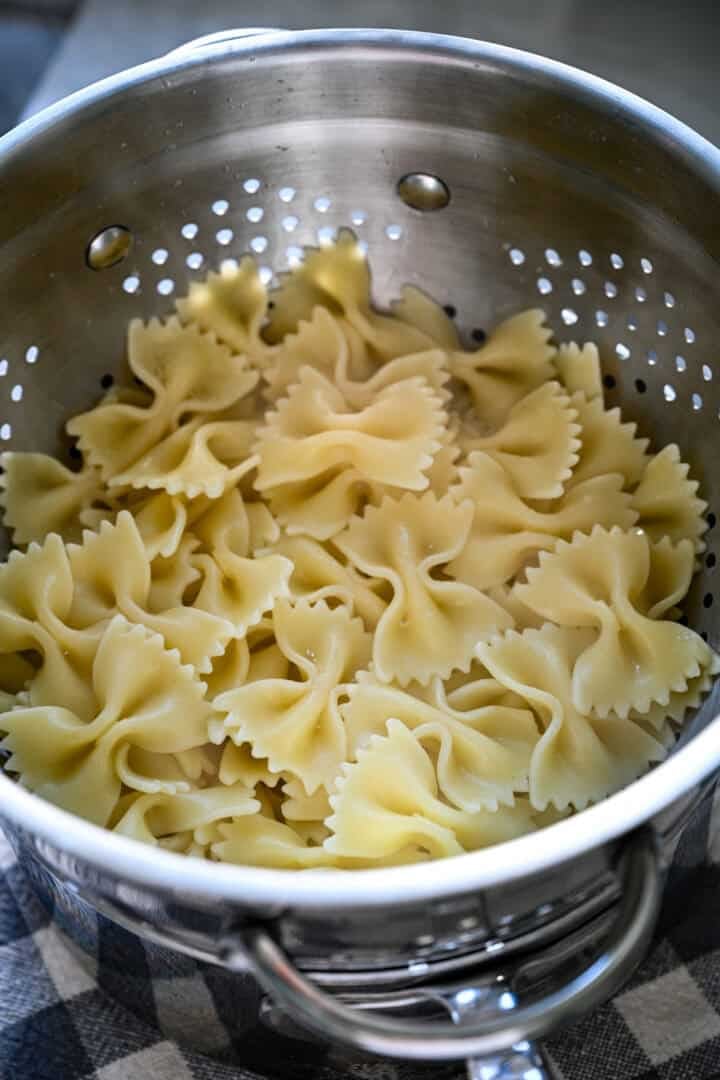
Boil the pasta
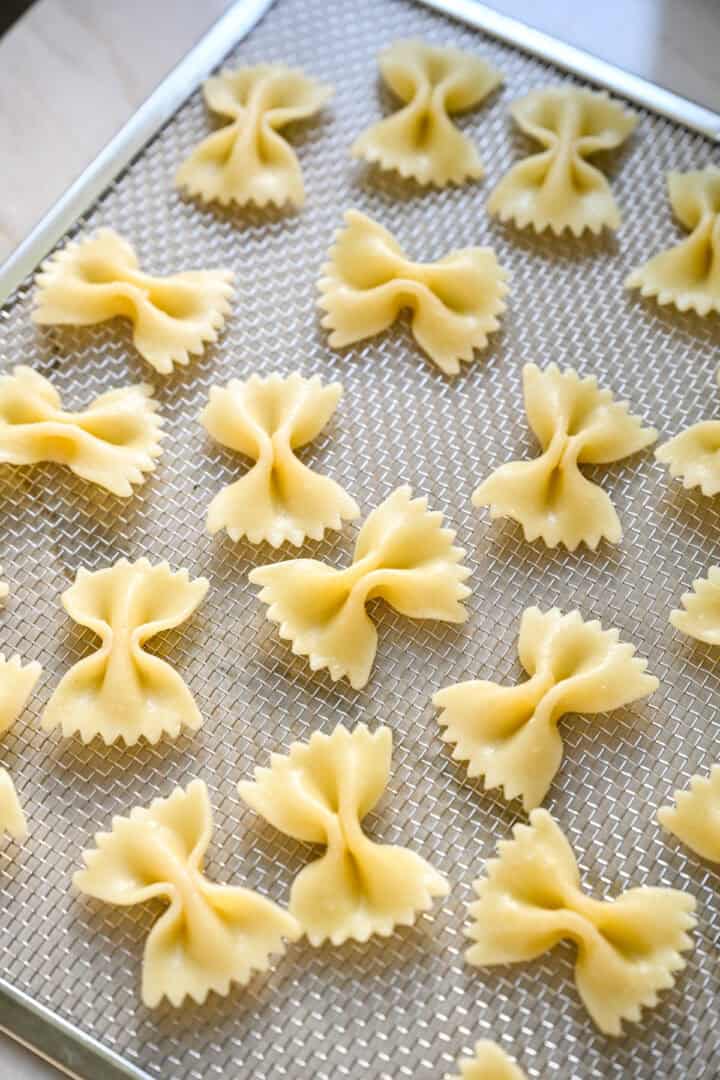
Cook the farfalle in heavily salted water for a few minutes longer than the package says. It should be completely soft all the way through, including the pinched center. Drain it, but don’t rinse.
Dehydrate until hard
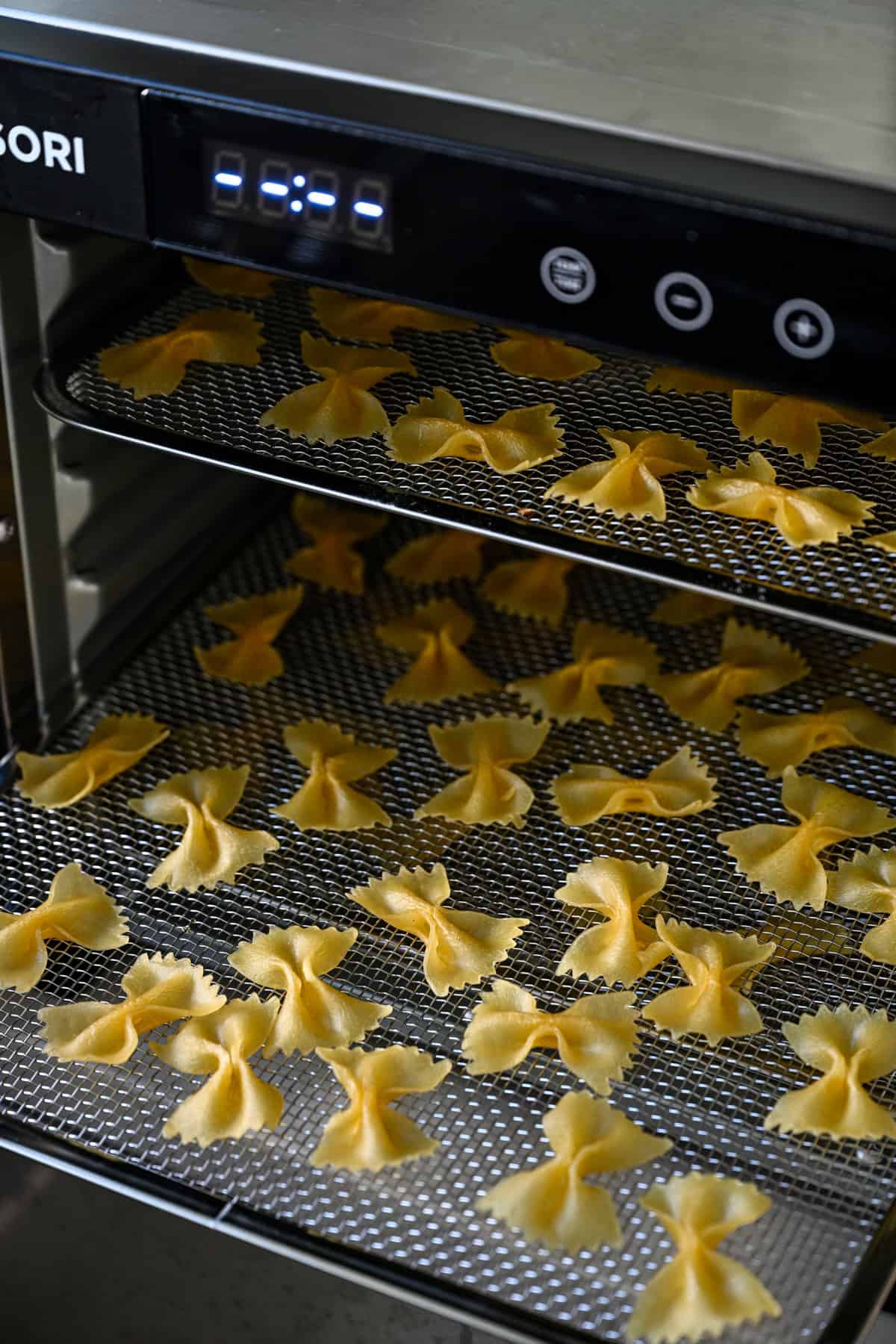
Onto the dehydrator trays, arrange the pasta in a single layer so the pieces aren’t touching. Dehydrate at 135˚F for 4 to 6 hours. It’s ready when it looks like it did straight out of the box and snaps instead of bending. If it’s still a little soft, just leave it in longer.
Fry and season
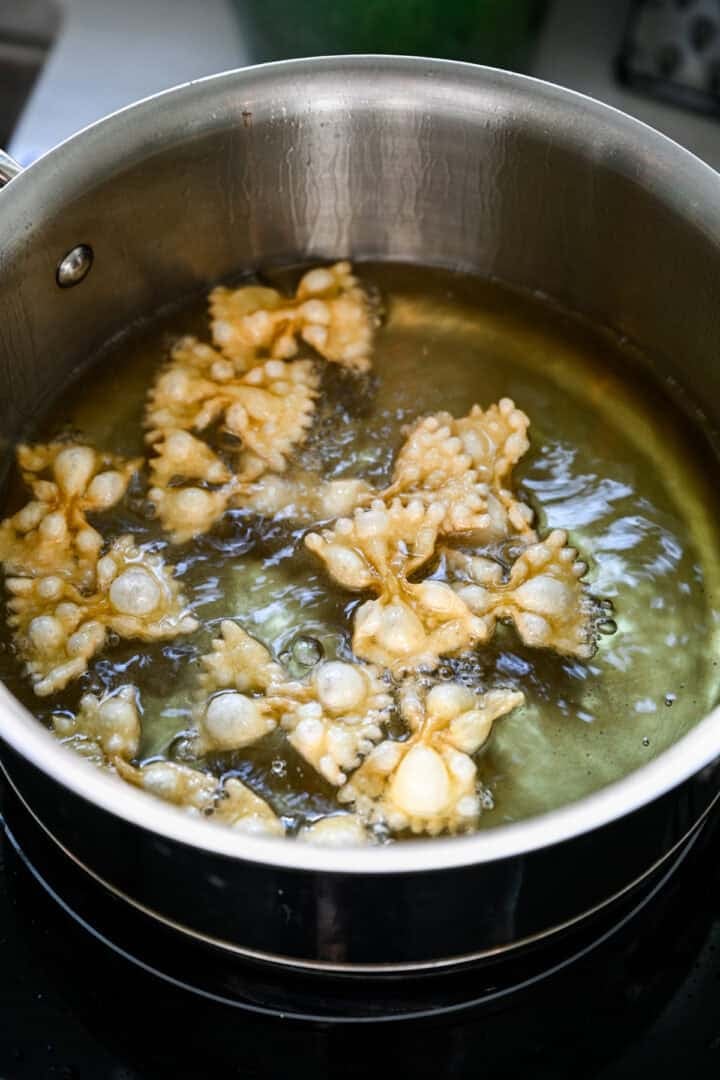
Heat the oil in a deep, heavy pot to 400˚F, and stir together the parmesan, Italian seasoning, pepper and salt while you wait. Drop in a handful of pasta and step back, since it tends to splatter.
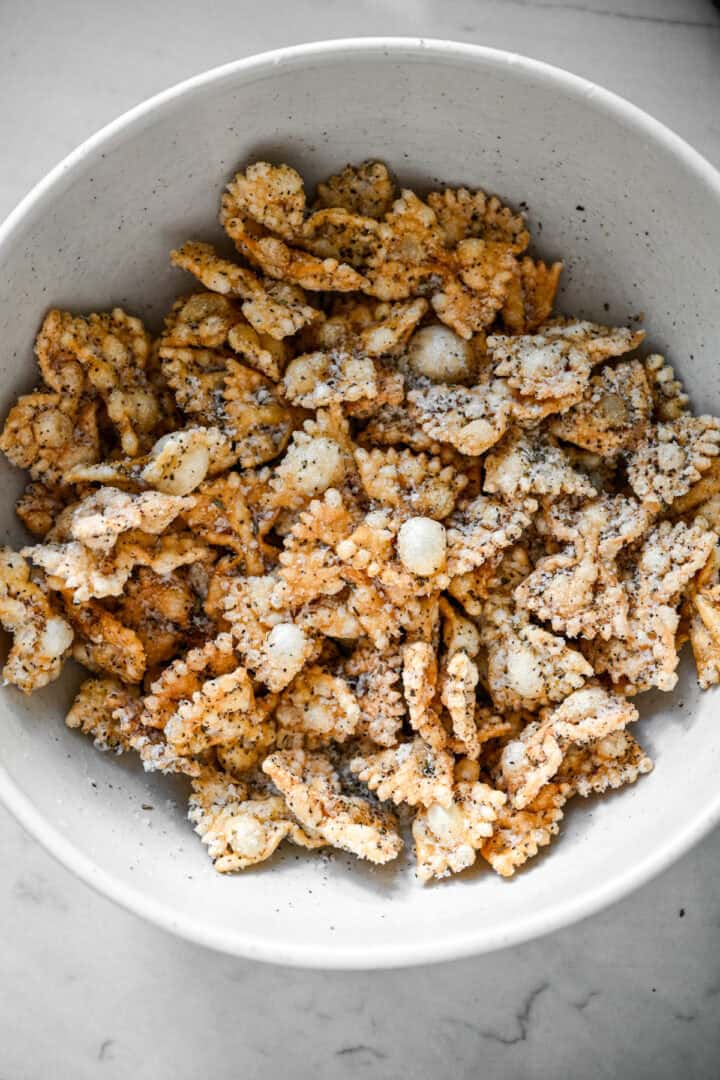
Nothing happens for 5 to 10 seconds, and then it all puffs up at once (this is the fun part!). Pull the puffs out as soon as they’ve puffed, let them drain on a wire rack, and toss them in the seasoning while they’re still warm.
Top Tips from the CK Test Kitchen!
- Heavily salt your pasta water: This is how you season the pasta from inside out. If you don't add enough salt, your chips might be on the bland side. I never measure the exact amount, but I add in several big pinches. It's honestly hard to overdo it. As the saying goes, your pasta water should be "salty like the sea".
- Cook the pasta past al dente: The pasta needs to be completely soft all the way through in order for it to puff up evenly. We cook ours a few minutes past the directions listed on the package. To test it, make sure the center where it's pinched is as soft as the rest of the pasta. When it is, it's done.
- The air fryer does not work here: These will not puff up in an oven or air fryer – the oil is 100% necessary.
- Dehydrate the pasta until it's completely dry. It should basically look and feel like it did before you boiled it, with no moist or soft spots. The coolest thing about this: once it's totally dry, you can store it like regular pasta at room temperature for months and then just fry it up in a few seconds.
- No dehydrator? Turn your oven onto its lowest temperature and crack the door open with an oven mitt or trivet. At 175˚F, the lowest setting on a lot of ovens, it should take 2 to 4 hours for the pasta to dry completely.
- Season while hot so the parmesan and other seasonings stick. You can season in batches (to taste) and add more as you go.
- Storage: Keep these in a container at room temp for about 3-4 days. Don't store in the fridge – the humidity will make them go soft.
More Snack Recipes You'll Love
Tried this recipe? Leave a comment with a star rating ⭐⭐⭐⭐⭐ below. You can also snap a photo and tag @crowded_kitchen on Instagram. We can't wait to see what you're cooking!
Cook with us often? Tell Google you want Crowded Kitchen recipes near the top of your results.
📖 Recipe
Cacio E Pepe Pasta Puffs
Ingredients
Equipment
Method
- Boil the pasta in heavily salted water for several more minutes than the stated cook time on the package. The pasta should be soft all the way through (including in the center). Drain the pasta, but don't rinse it.
- Lay the pasta in a single layer (not touching) on dehydrator trays.
- Dehydrate at 135˚F for 4 to 6 hours. They should be completely hard (like unboiled pasta) and a little translucent at the edges. It should snap and not bend at all. If it's still slightly soft/bending at all, leave it in until it's hard.
- Add the oil to a deep, heavy pot and heat it to 400˚F.
- While the oil is heating, mix together the parmesan, Italian seasoning, pepper and salt in a bowl so it's ready for seasoning. Set a wire rack atop a sheet pan and set it next to the pot.
- Using a slotted spoon or a spider, drop in a handful of pasta. Step back – it tends to splatter up. Don't have any kids or animals around while you're doing this! Nothing will happen for 5 to 10 seconds, but then it will puff up very quickly. Once it's all puffed, remove the pasta right away (don't let it continue frying). It will be light golden brown and very bubbly on the surface.
- Let the excess oil drip off for a few seconds, then transfer to the wire rack. Once it cools slightly, toss it in seasoning while it's still warm. Repeat with remaining pasta, making sure the oil returns to 400˚F between each batch.

Comments
No Comments