Ingredients
Method
- Preheat the oven to 350˚F/180˚C.
- In a large bowl, whisk together the flour, sugar, salt, baking soda, baking powder, and caraway seeds.
- Add in the raisins, tossing to coat in the flour mixture.
- In a separate medium bowl, whisk together the buttermilk, egg, and vanilla.
- Using a box grater, grate the frozen butter into the bowl with the flour mixture. Gently work the ingredients together with a spatula or your hands so butter is evenly distributed. Work quickly so the butter doesn’t melt.
- Add in the buttermilk mixture and gently mix just until a shaggy dough forms. Avoid over-mixing – you should still be able to see the butter pieces throughout the dough.
- Transfer the dough to a clean, lightly floured surface. Using floured hands, shape the dough into a roughly 10-inch disk. Using a sharp knife or bench scraper, cut the dough into 8 triangle wedges.
- Transfer the scones to a parchment paper-lined baking sheet. Place the scones in the freezer for 15 minutes, or in the refrigerator for 30 minutes to chill.
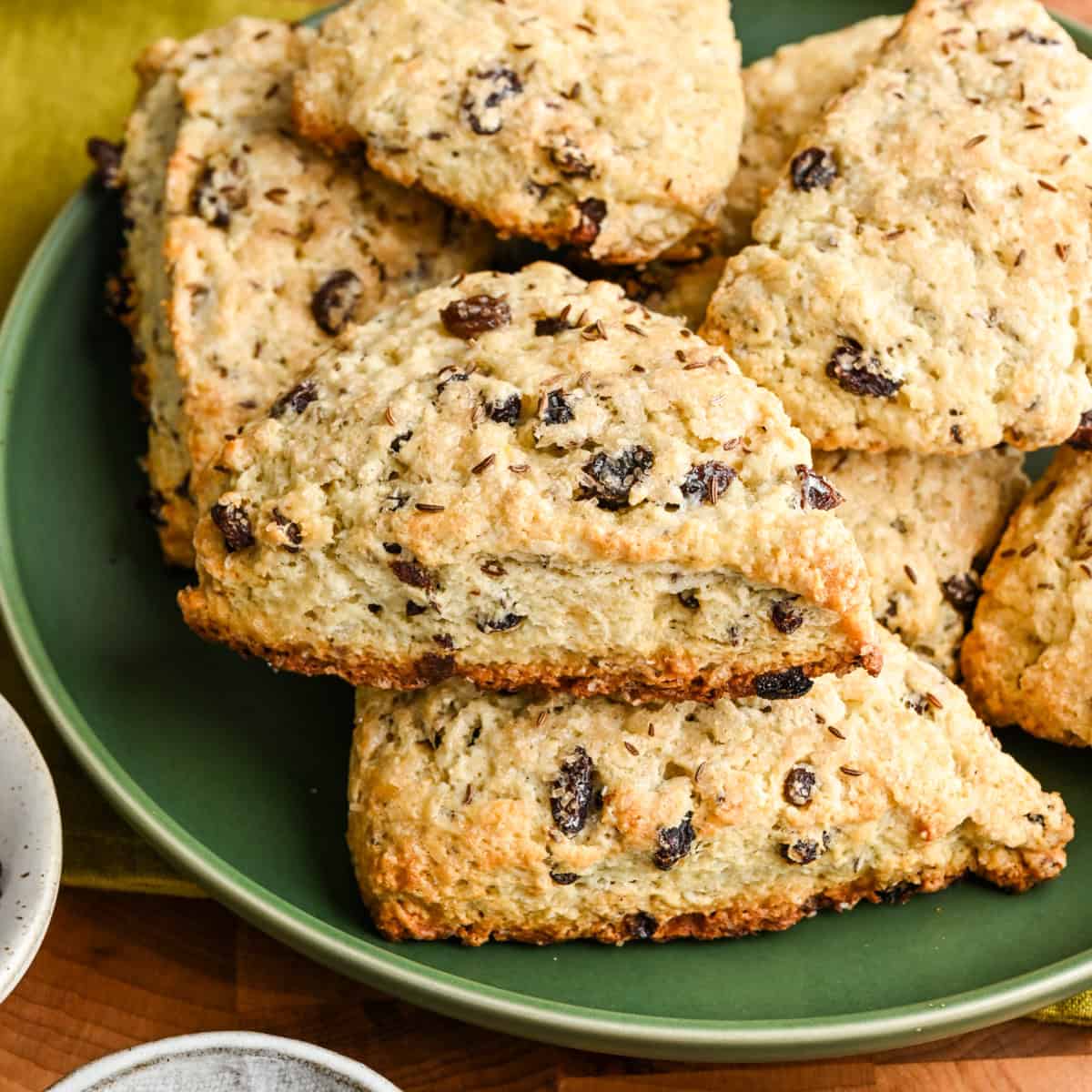
- Before baking, brush the tops with more buttermilk, then sprinkle with coarse sugar and a few additional caraway seeds. Bake for 20-25 minutes, until light golden brown on top. Let cool, then enjoy!
Notes
Storage: Once baked and cooled, store the scones in an airtight container at room temperature for up to 3 days maximum. Scones tend to dry out fairly quickly, so they will taste best fresh (within 24 hours).
For longer term storage, freeze the baked scones for up to 3 months. You can reheat them straight from the freezer in a 300˚F oven for 8-10 minutes. For best results, freeze the scones as soon as they are baked and cooled – they'll taste freshest this way!
Use a light-colored baking sheet to keep the bottoms from browning too quickly. This tip goes for all baked goods – a dark nonstick baking sheet can cause premature browning on the bottoms of baked goods. These are the baking sheets we typically use. If you don't have any, you can also stack a second baking sheet underneath to keep it from heating too quickly.
Keep everything cold: For perfect, flaky scones, it's super important that your butter and buttermilk are cold. We freeze our butter for an hour or two before making the dough. Don't overwork the dough – this not only makes your scones tough, but the more handling, the warmer the butter. For best results, refrigerate or briefly freeze the scones before baking.